The Origin & Regional Context
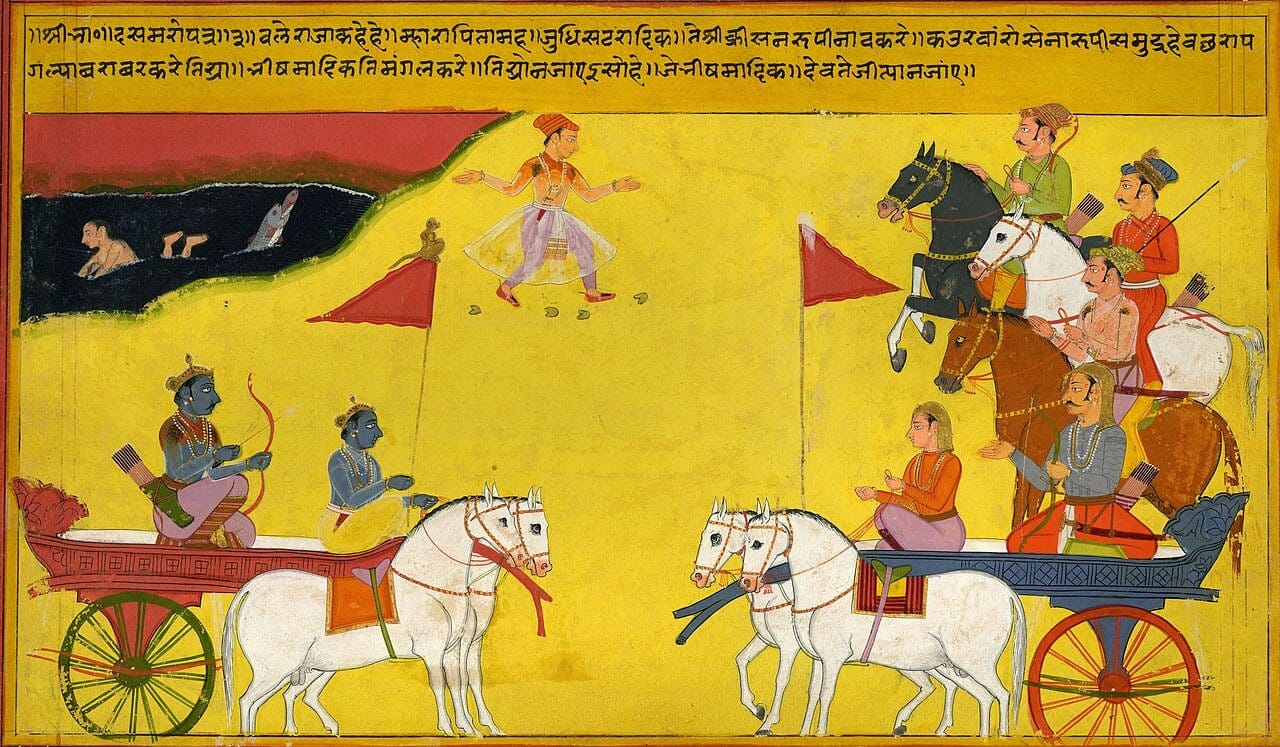
Flourishing across the fertile plateau of Central India in centers like Narsinghgarh, Mandu, and Rajgarh, Malwa painting occupies a singular place in seventeenth-century Indian art. While surrounding ateliers in Rajasthan and Delhi increasingly absorbed Mughal imperial naturalism and atmospheric depth, Malwa deliberately held fast to an older, indigenous Indian visual language.
Throughout the seventeenth century, Malwa workshops created illustrated manuscripts steeped in Vaishnava sentiment. Free from courtly vanity or delicate shading, the painters preserved the fierce narrative vigor of the earlier Chaurapanchasika style. In the hot, dry winds of the Vindhya tablelands, the pastoral world of Braj was translated into bold, flat planes of pure pigment. Malwa painters did not treat Radha and Krishna as distant rulers; they placed them inside graphic architectural compartments, presenting divine love with architectural discipline and primal intensity.
Visual Grammar & Iconography
Malwa painting is instantly recognizable for its non-naturalistic space, intense color blocking, and geometric harmony:
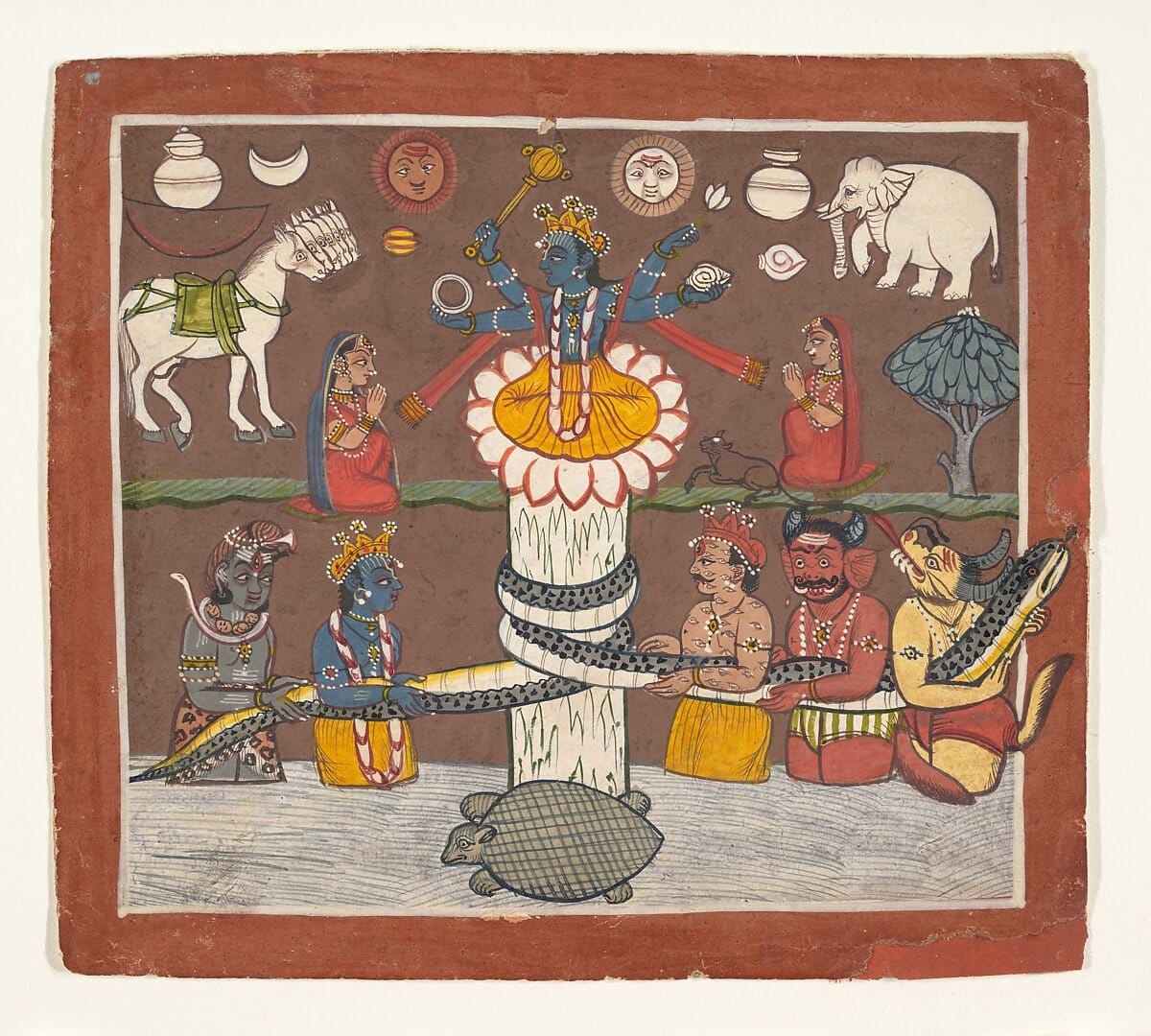
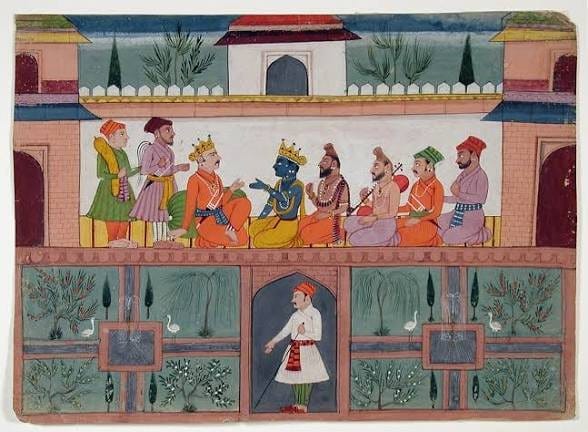
- Flat Compartmentalized Architecture: Compositions are divided into geometric zones and horizontal registers. Pavilions feature stepped, domed roofs, white projecting eaves (chhajjas), and small arched niches, dividing the narrative into distinct interior and exterior chambers.
- Saturated Monochromatic Grounds: Scenes rest against unmodulated planes of pure mineral color: deep chocolate brown, burning cinnabar red, and rich mustard yellow. These stark backgrounds isolate figures in brilliant contrast.
- Graphic Stylized Anatomy: Characters are rendered with sturdy proportions and expressive profiles. Large, wide lotus eyes glance directly at one another, noses are sharp, and chins are firm, creating an immediate and sincere presence.
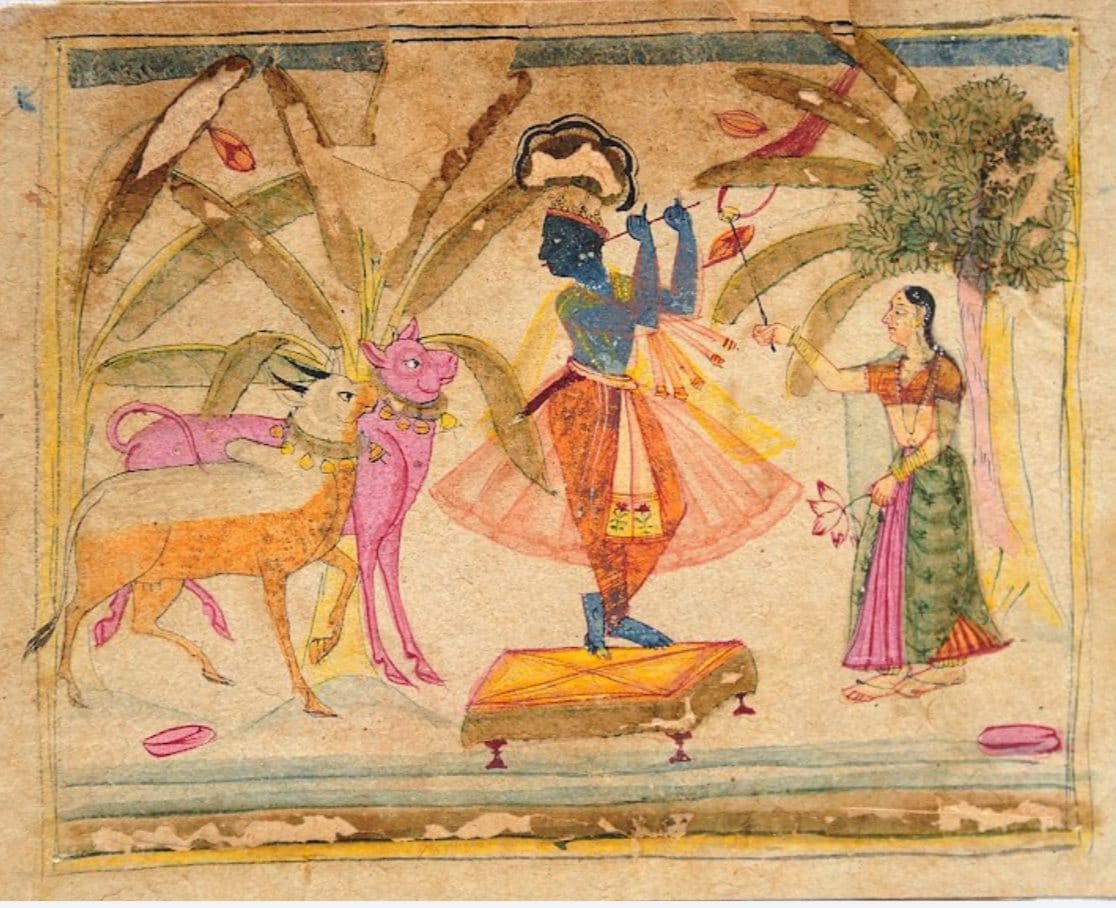
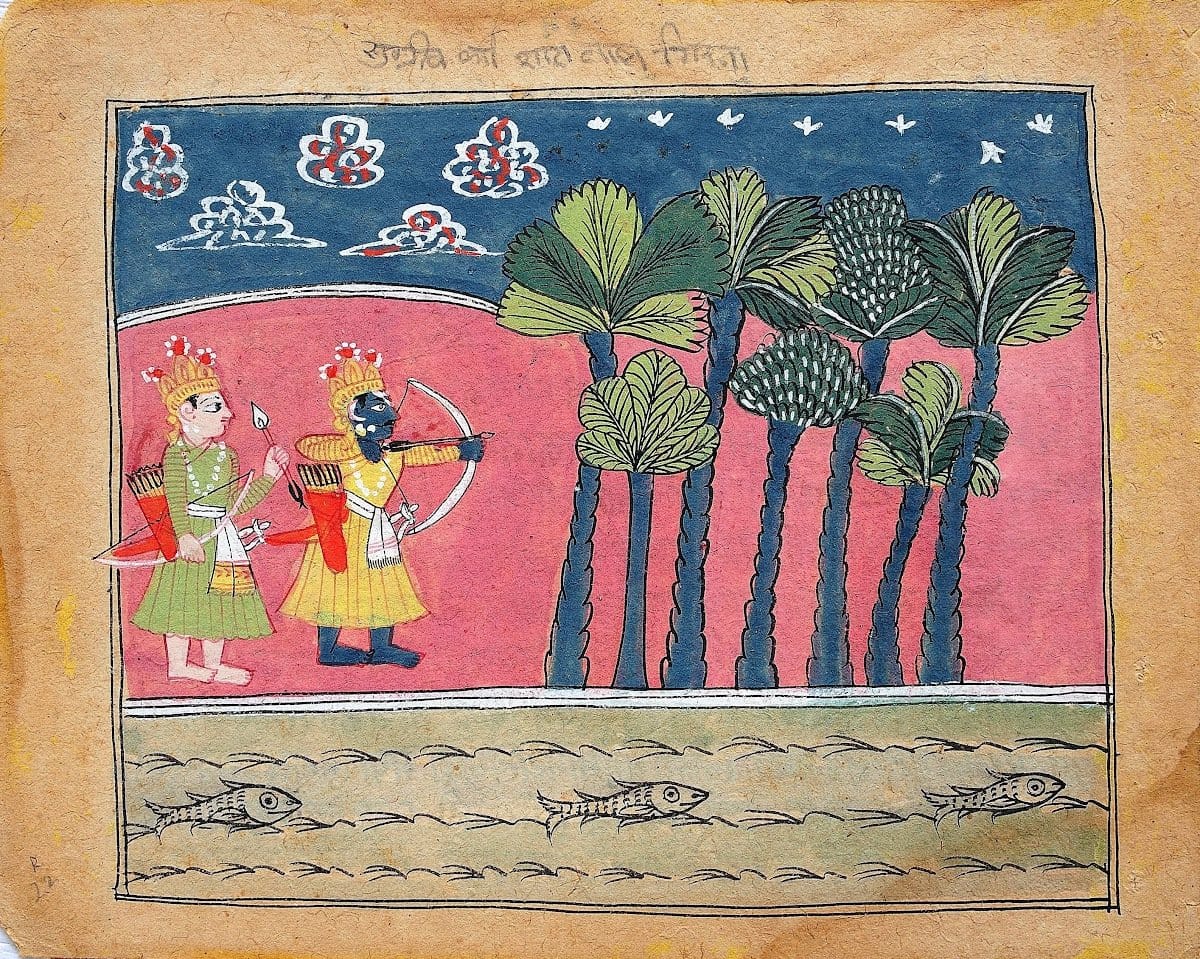
- Abstract Pastoral Flora: Nature is painted not with botanical realism, but as decorative symbols. Trees are represented as compact, rounded rosettes filled with rhythmically clustered leaves and small stylized blossoms along dark stems.
Material Anatomy & Process
The bold graphic finish of Malwa folios was grounded in durable indigenous techniques:
- Heavy Hand-Beaten Wasli: Painters laminated thick sheets of indigenous cotton-fiber paper using cooked wheat-starch paste infused with neem. The paper was burnished with agate stones to achieve a dense, tooth-free surface.
- Opaque Mineral Tempera: Pigments were applied flat without translucent washes or European-style chiaroscuro. The palette included:
- Red: Dense, pulverized cinnabar (hingul) and deep red iron oxide.
- Yellow: Earthy peori clay and bright mineral orpiment (haritala).
- Blue: Coarse indigo extract, applied opaquely for Krishna's skin and night skies.
- White: Calcined conch shells and lead white, used thickly for domes and pearl jewelry.
- Black: Fine carbon lampblack mixed with gum arabic for bold defining contours.
The Literary & Spiritual Roots
Malwa painting drew its inspiration from the golden age of Hindi court poetry:
- The Rasikapriya of Keshavdas: The Orchha poet's classical manual on aesthetics found its ideal visual counterpart in Malwa. Folios illustrate the complex moods of Radha and Krishna (hero and heroine), dissecting feelings of sweet union, proud separation (Maan), and nocturnal anticipation.
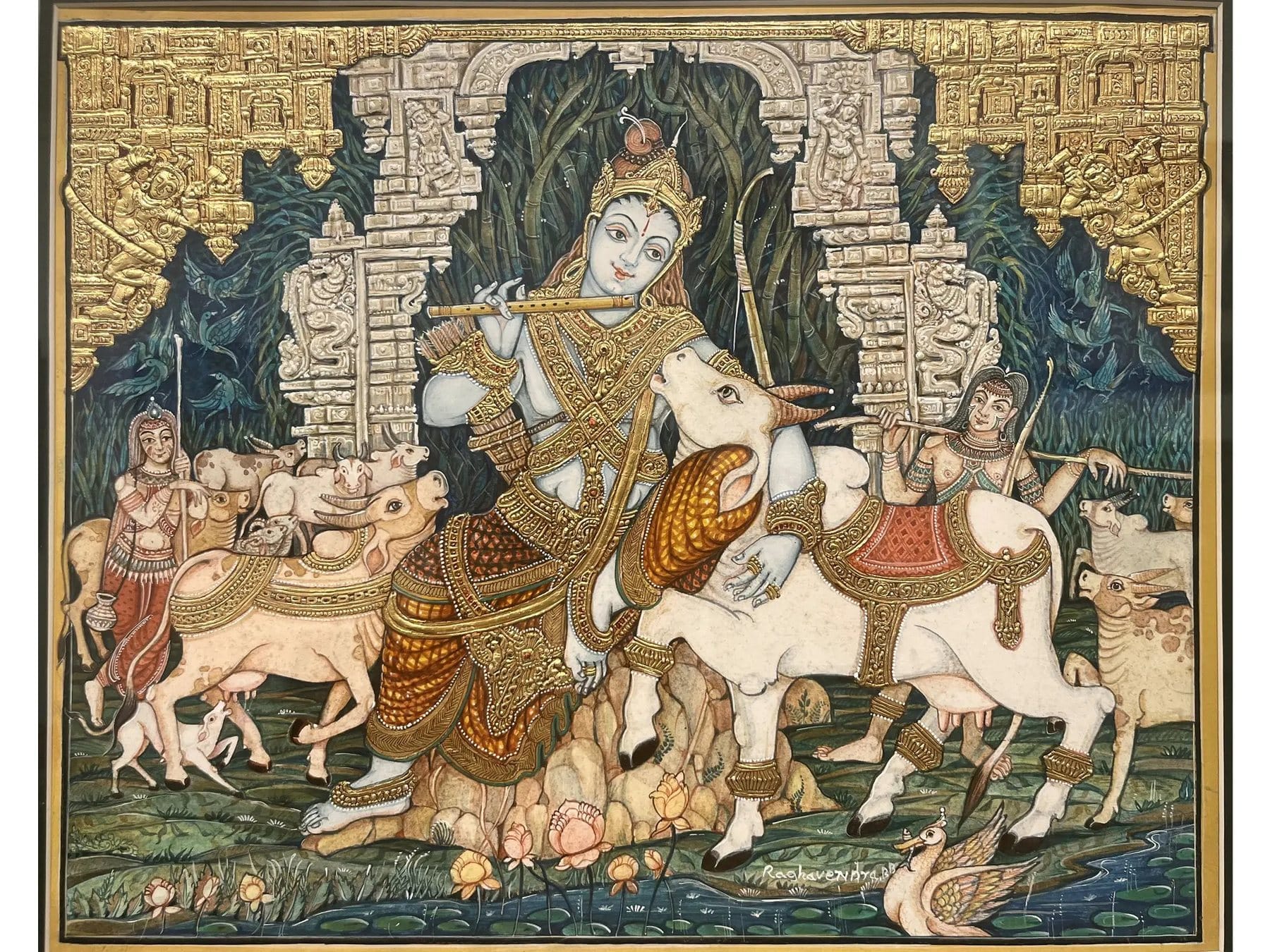
- The Bhagavata Purana: Vast narrative cycles illustrated the tenth book, depicting Krishna stealing butter, subduing demons, and playing with his cowherd companions.
- The Spirit of Sakhya and Madhurya: Malwa devotion is direct and warm. Divine love is grounded within household walls and courtyard pavilions, viewing the pastimes of Braj as an intimate, living reality.
Heritage, Lineage & Field Notes
- Indigenous Painter Guilds: Unlike imperial ateliers that signed individual names, Malwa painters worked collectively within hereditary family guilds, maintaining stylistic consistency across generations.
- Archival Discovery: The school was systematically identified and categorized in the mid-twentieth century by pioneering scholars such as Anand Krishna and W.G. Archer.
- Key Archival Repositories: Major collections include:
- National Museum, New Delhi: Major collection of Malwa Rasikapriya and Bhagavata folios.
- Bharat Kala Bhavan, Varanasi: Superb holdings of seventeenth-century Malwa leaves.
- Metropolitan Museum of Art, New York: Classic folios featuring the two-tiered pavilion layouts.
- British Museum, London: Important early Malwa narrative folios.
In Malwa, art avoided soft illusions and courtly pretense. By framing Radha and Krishna within bold lines and saturated primary hues, the painters captured the passion of Braj in its purest, most enduring form.